REVIEW · ALBUFEIRA
Pottery workshop in the Algarve
Book on Viator →Operated by AlgarvianRoots · Bookable on Viator
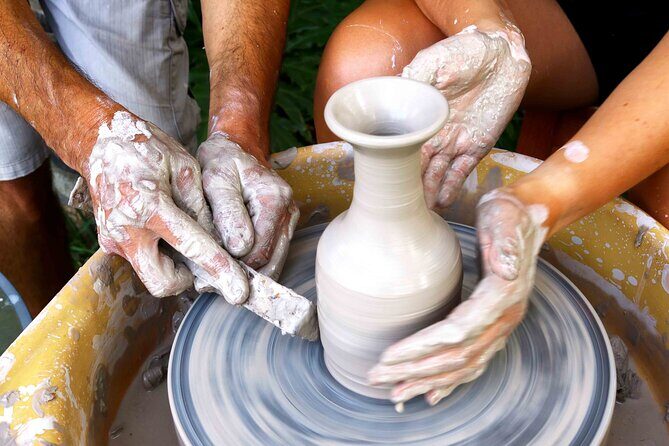
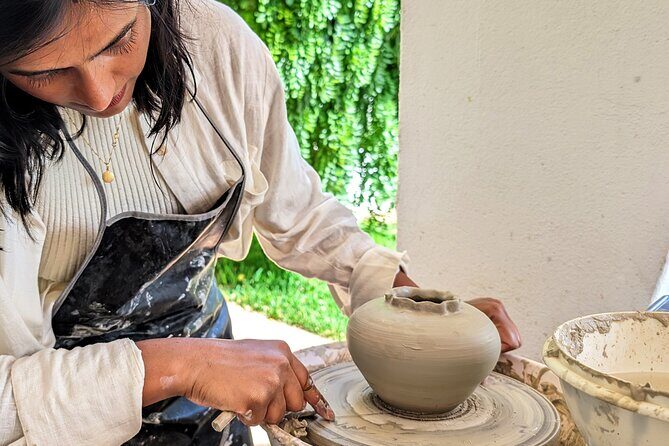
Clay. Music. And a calm wheel turning in Silves. This 3-hour Algarve pottery workshop is built around real, practical instruction: you learn wheel-throwing first, then move into modelling and decorating methods guided by a local pottery master. The whole setup runs in a small group, so you get time to ask questions and try again.
I love that the lesson starts simple on purpose. You begin with an easier piece, then progress to something more complex, which makes the technique feel doable instead of scary. I also like that the experience has a friendly, human touch—Francisco Simões often helps with translation while Jose Simoes (the ceramic master) demonstrates the work in a beautiful studio setting.
One thing to plan around: you do not leave with finished pottery. Your pieces need slow drying, then firing in a kiln, so collection is only available within 30 days, and shipping costs extra.
In This Review
- Key points before you go
- Pottery on a schedule: how the 3-hour Silves class works
- Meet the team: Francisco Simões and Jose Simoes at the studio
- From simple to more complex: the skills-building flow
- Your pieces aren’t finished when you leave—and that’s normal
- Price and value: what $132.15 buys you, and what costs extra
- Where it fits in your Algarve itinerary (and who will love it)
- Should you book? My practical decision guide
- FAQ
- How long is the pottery workshop?
- Where is the meeting point?
- What time does the workshop start?
- Is the workshop offered in English?
- What is the maximum group size?
- Are the finished pottery pieces ready the same day?
- Is shipping included in the price?
- How much does shipping cost?
- Is the workshop suitable for children?
- What happens if the workshop is canceled due to weather?
Key points before you go
- Small group size (max 6): more time at the wheel and less waiting around
- Wheel + decorating in one session: you build form first, then add personality
- Local master instruction (Jose Simoes) + translation support (Francisco Simões): smooth, hands-on guidance
- Leave with something to look forward to: firing and drying mean your final pieces arrive later
- Studio add-ons: homemade snacks and refreshments are part of the afternoon
Pottery on a schedule: how the 3-hour Silves class works
This workshop is about focused making, not rushing. You meet in the Silves area at Cerro São Miguel 107 (8300 Silves) at 3:00 pm, and the session runs about 3 hours. The timing matters because it gives enough time to learn the basics, try more than one technique, and still slow down for decorating.
Because the group is capped at 6 people, the pace feels personal. You’re not stuck watching while someone else takes turns. You can ask why something collapses, how to correct your hands on the wheel, or what to do when you’re working with a new tool. That matters on the pottery wheel, where small adjustments change everything.
Also, this isn’t just wheel time. You’ll explore other modelling and decorating approaches, so even if the wheel part is hard at first, you still leave the session with clear progress and a plan for the final look.
Other workshops and classes we've reviewed in Albufeira



Meet the team: Francisco Simões and Jose Simoes at the studio
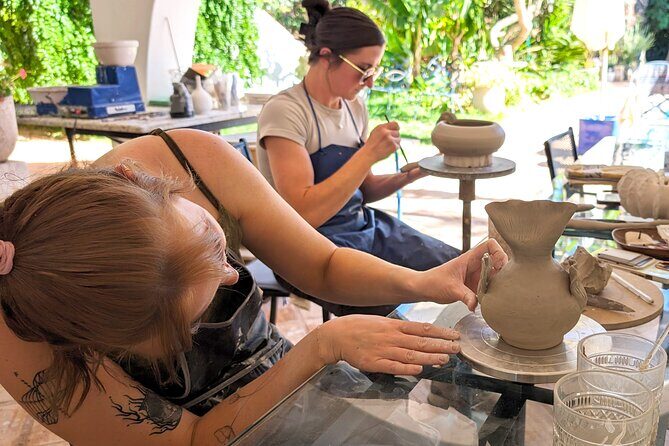
The tone here is practical and warm. Francisco Simões is often the key point of contact, and he may act as translator while Jose Simoes explains technique and best practices. That combination helps a lot if your Portuguese is basic but you still want to understand what you’re doing and why.
Jose Simoes also brings a maker’s eye. In the studio setting, you’re not just learning steps from a script. You’re being shown how a real ceramic master thinks—how to shape evenly, how to handle clay without tearing it, and how to keep the process steady. It’s the kind of instruction that helps you avoid the usual beginner mistakes.
And the studio vibe is part of the experience. The workshop takes place at a well-regarded ceramics villa/studio environment with a garden around the workspace. Even if you’re not a garden person, it keeps the afternoon from feeling like a factory class—more like you’re visiting someone’s craft space.
From simple to more complex: the skills-building flow
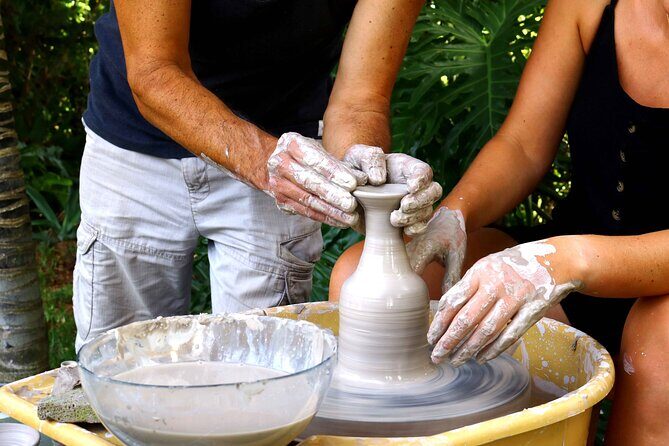
The structure is smart: you start with an easier piece, then you move on to a more complex one. That’s not just for fun; it’s how you avoid frustration. Pottery is physical and slightly unpredictable. Starting simple gives you a chance to learn the rhythm—how to center clay, how much pressure to use, and how to keep your movements controlled.
Once the first piece clicks, you’re ready to attempt something more involved. The goal isn’t perfection. It’s control. With wheel throwing, you’re learning how to make the clay behave. With modelling and hand-building methods, you’re learning how to shape and form without relying on the wheel alone.
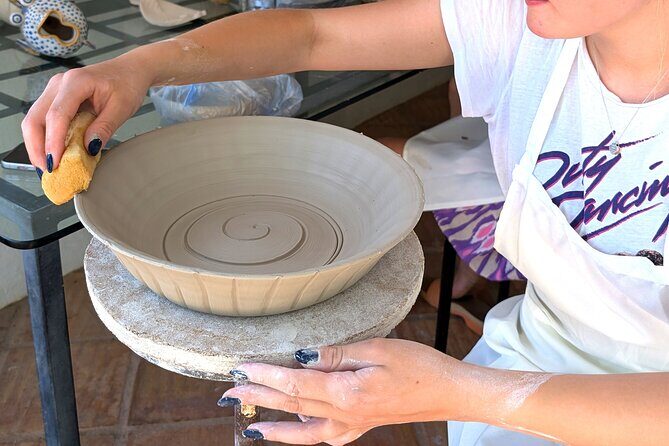
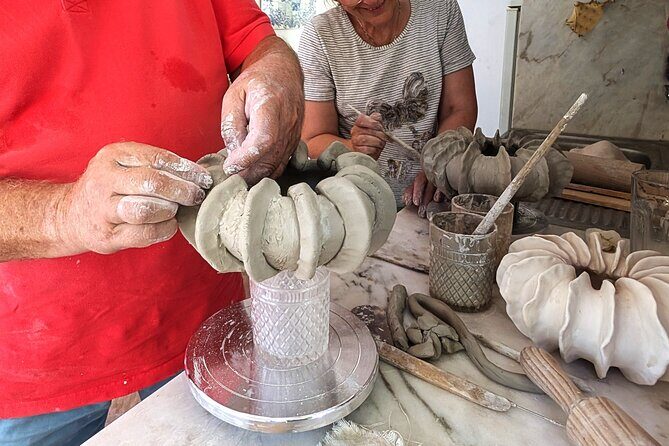
Then comes the fun part: the decorating phase. You’ll decorate using different techniques, so you can personalize your work rather than leaving everything to chance. In the experience, people have made pieces inspired by things like leaves and forms that feel playful and natural. Even if your design idea changes halfway through (it often does), you’ll have time to steer it.
Practical tip: bring your imagination, not just your confidence. If you go in worried you won’t be good, you’ll miss the best part, which is learning by doing.
Your pieces aren’t finished when you leave—and that’s normal
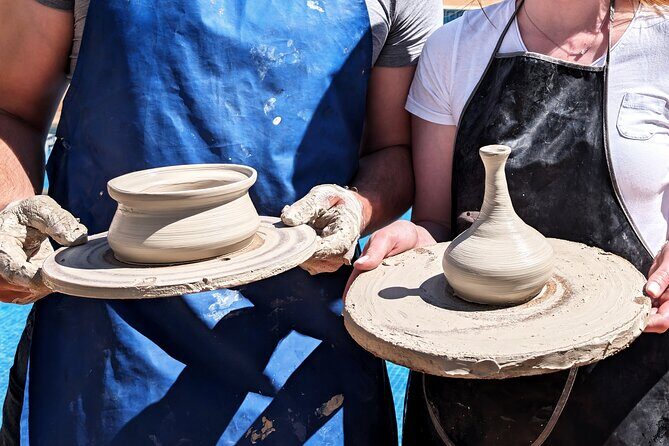
Here’s the key expectation to set up front: the pottery won’t be ready at the end of the workshop. Clay needs to dry slowly before it can be fired in a high-temperature kiln. That waiting time is part of the craft and part of why handmade pottery lasts.
What you do get is the start of your final objects. You’ll create the forms during the class, and then the drying and firing steps happen afterward. You’ll have collection within 30 days.
If you’re thinking like a tourist who needs souvenirs immediately, this might not match your travel style. But if you’re okay with a delayed payoff—having a real ceramic piece waiting back home or ready for pickup—it’s a great value trade. You’re paying for the making and the follow-through, not for an instant takeaway.
Price and value: what $132.15 buys you, and what costs extra
At $132.15 per person, this workshop sits in the mid-range for hands-on activities in the Algarve. The value comes from the mix of things that are hard to find together: small group size (max 6), real wheel instruction, multiple clay techniques, and a studio environment run by a ceramic master with support from Francisco Simões.
“All fees and taxes” are included in the price, which you’ll appreciate once you compare it to add-on-heavy experiences. You’re also getting a class that runs about 3 hours, so it’s not a quick demo where you get ten minutes and a photo.
The main extra cost you should plan for is shipping. Shipping of the finished pieces is not included. If you want them sent:
- Portugal and Europe: €10.00
- America: €20.00
If you don’t need shipping—if collection works for your schedule—then you’re avoiding that additional fee entirely.
One more practical consideration: this experience depends on good weather. If it’s canceled due to poor conditions, you’ll be offered a different date or a full refund.
A few more Albufeira and Algarve tours and experiences worth a look

Where it fits in your Algarve itinerary (and who will love it)
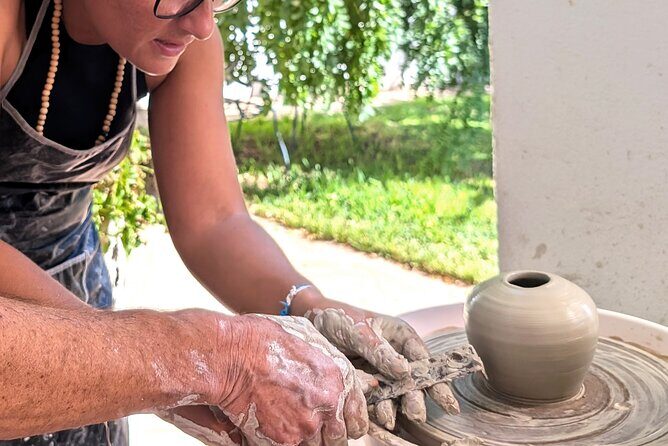
This is best for people who want a hands-on craft rather than sightseeing. If your Algarve plan is mostly beaches and Old Town walks, this adds something creative and local that you can’t easily recreate at home.
It also suits small groups and families who want a shared activity. The workshop has a strong recommendation record and people often describe it as a highlight because it’s both instructional and genuinely enjoyable. That said, it’s not recommended for children under 18, so it’s more of an adult and teen-plus activity than a kids craft.
Language is covered: the workshop is offered in English. If you want to understand the technique instead of just mimic motions, translation support (when needed) helps a lot.
You should also consider your tolerance for waiting. You’ll leave with unfinished work that turns into the finished piece later. If you hate delays, pick something else. If you’re fine with the idea of a souvenir that arrives in the next month or that you pick up once it’s ready, you’ll likely feel very satisfied with the outcome.
Should you book? My practical decision guide
Book it if you want a real craft class with wheel time, guidance from Jose Simoes, and support from Francisco Simões. The small group size and the step-by-step progression from simple to complex make it beginner-friendly in a smart way. You’ll also get decorating time, so your pottery won’t feel like a bland lesson project.
Skip it if you need an instant souvenir. Since the pieces are fired later and you only collect within 30 days, you’re trading speed for quality and tradition. Also, if weather changes your plans easily, remember the experience requires good weather.
If you want something memorable that feels authentically Algarve—not just another photo stop—this pottery workshop is a solid choice.
FAQ
How long is the pottery workshop?
It lasts about 3 hours.
Where is the meeting point?
The meeting point is Cerro São Miguel 107, 8300 Silves, Portugal.
What time does the workshop start?
The start time is 3:00 pm.
Is the workshop offered in English?
Yes, it is offered in English.
What is the maximum group size?
The workshop has a maximum of 6 travelers.
Are the finished pottery pieces ready the same day?
No. The pieces need slow drying and firing in a kiln, so they are ready for collection within 30 days.
Is shipping included in the price?
No. Shipping is not included, and an extra fee applies.
How much does shipping cost?
For Portugal and Europe it’s €10.00, and for America it’s €20.00.
Is the workshop suitable for children?
It is not recommended for children under 18 years old.
What happens if the workshop is canceled due to weather?
If canceled due to poor weather, you’ll be offered a different date or a full refund.